A Practical Approach to Auditing Culture
Culture is frequently cited as a contributing factor in organisational successes and failures, yet it has remained one of the more challenging areas for internal audit to address with clarity. On 11 December 2025, IIA Singapore’s webinar “A Practical Approach to Auditing Culture” brought fresh perspective to this topic, with Sandro Boeri, Immediate Past President of the Chartered Institute of Internal Auditors (UK), who encouraged participants to focus not on whether culture can be audited, but on how it can be approached in a way that is credible, structured, and practical.
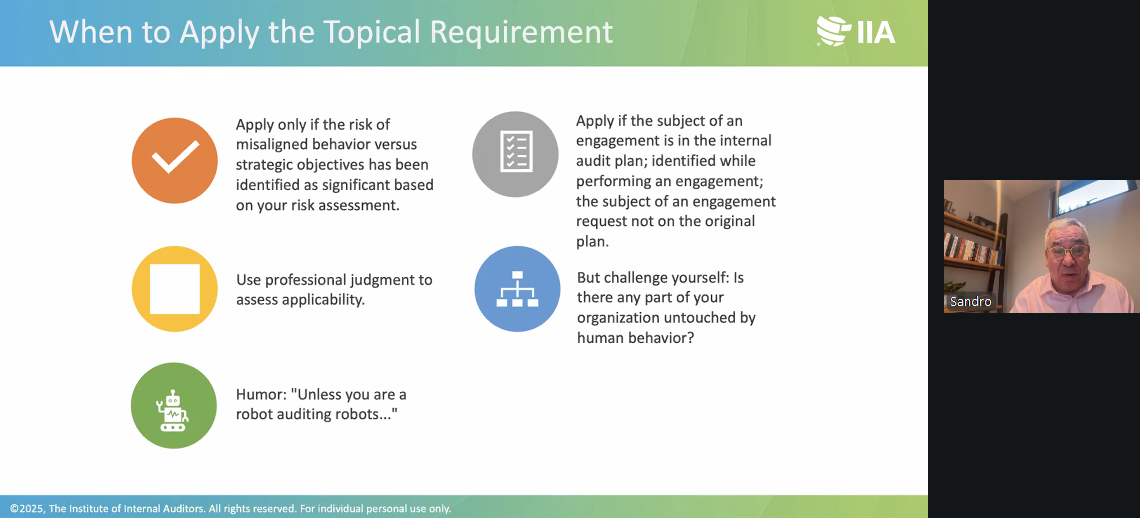
Organisational behaviour encompasses the human side of risk, comprising the observable actions, decisions, and interpersonal dynamics of individuals and groups within an organisation. Misaligned behaviour can prevent organisations from achieving strategic objectives, fulfilling stakeholder expectations, and complying with regulatory standards. Sandro introduced attendees to the IIA’s Organisational Behaviour Topical Requirement, a newly released element of the International Professional Practices Framework (IPPF). The Organisational Behaviour Topical Requirement provides a minimum baseline and a consistent, comprehensive approach to help auditors assess the design and effectiveness of control processes related to behaviour.
Throughout the session, Sandro explored how observable patterns of behaviour, how decisions are made, how people respond to incentives and controls, and how management expectations are reinforced in practice, can be considered in audit engagements. Drawing on examples and practical techniques, he outlined ways internal auditors can incorporate behaviour011related risks into planning, fieldwork and reporting without adding excessive complexity. He also highlighted how behavioural insights can be linked back to governance structures and control processes in a way that resonates with senior management and boards.
The webinar offered members useful takeaways on applying behavioural frameworks within existing audit approaches, broadening the lens through which risk is evaluated and reported. As internal audit continues to adapt to evolving expectations, the emphasis on structured, evidence011based consideration of organisational behaviour can support functions in addressing a risk dimension that increasingly influences organisational performance and resilience.