AI-Enabled Fraud: Strengthening Internal Audit Readiness for the Next Wave of Threats
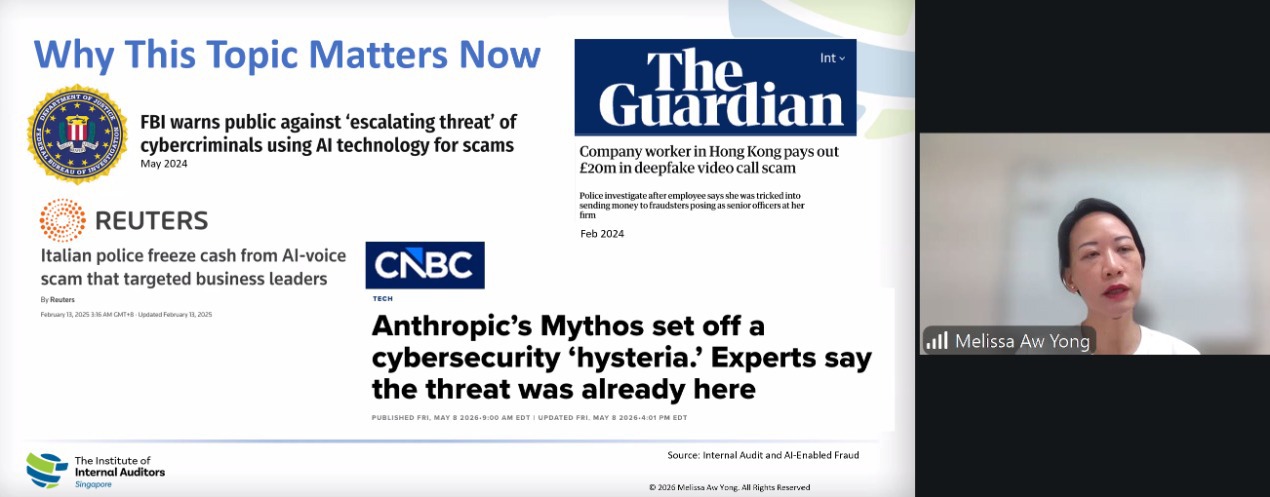
As artificial intelligence continues to transform the way organisations operate, it is also reshaping the fraud landscape. From deepfake impersonations and synthetic identities to increasingly automated fraud schemes, emerging threats are becoming more sophisticated, scalable, and difficult to detect using traditional controls.
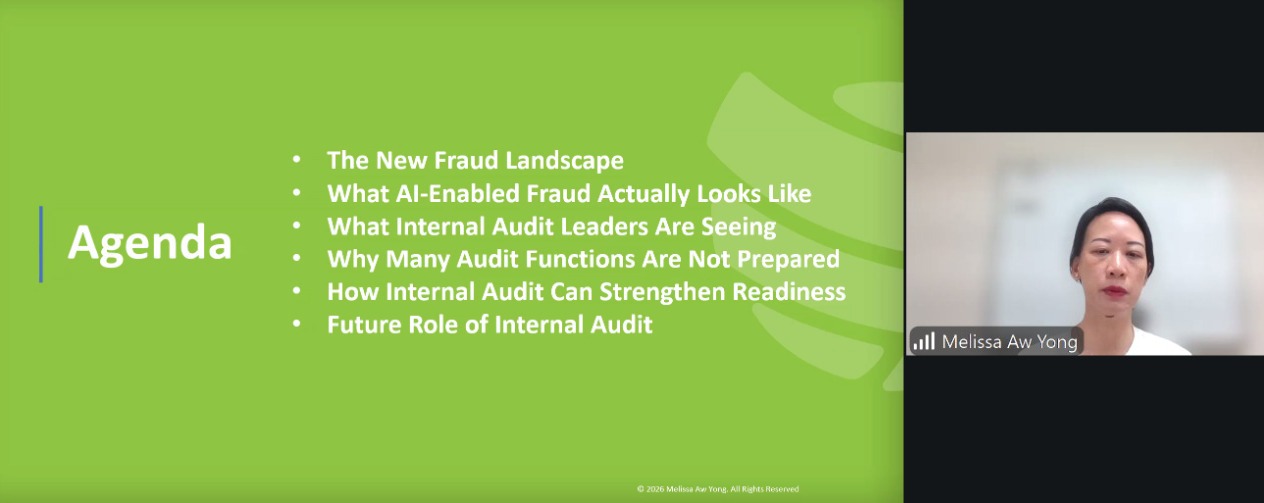
The webinar, “AI-Enabled Fraud: Strengthening Internal Audit Readiness for the Next Wave of Threats”, held on 20 May 2026 as part of Internal Audit Month, attracted over 270 participants from Singapore and across the Asia-Pacific region. Presented by Melissa Aw Yong, the session explored how AI is changing the nature of fraud and why internal audit functions need to evolve just as quickly. Participants gained insights into what AI-enabled fraud looks like in practice, the warning signs internal audit teams should look out for, and why many organisations remain underprepared for the next wave of threats.
Moving beyond awareness, Melissa outlined practical strategies for strengthening internal audit readiness. These included enhancing fraud detection through behavioural risk indicators and advanced monitoring techniques, while building capability through continuous learning, practical testing exercises, advanced upskilling, and professional certification.
The webinar also highlighted that preparing for AI-enabled fraud requires more than technical capability within the internal audit function. Organisations should establish enterprise-wide visibility of AI adoption, integrate AI considerations into audit planning and risk assessments, and strengthen collaboration between internal audit, cybersecurity, IT, risk management and business units. Breaking down silos and ensuring adequate resourcing will be critical to building organisational resilience.
As AI continues to reshape both business operations and fraud risks, the role of internal audit is evolving alongside it. By strengthening AI fluency, embracing continuous learning and working collaboratively across the organisation, internal auditors will be better positioned to anticipate emerging threats and provide forward-looking assurance in an increasingly complex risk environment.