Implementing Effective Whistleblowing Programmes and Governance
On 11 June 2026, IIA Singapore hosted a webinar on “Implementing Effective Whistleblowing Programmes and Governance”, led by Ong Woon Pheng (Director, Financial Advisory Services, Nexia Singapore PAC), Edwin Hooi (Director, Risk Advisory Services, Nexia Singapore PAC), and David Morgan (Global Managing Director, Veremark Whistleblower Technology Solutions). The session explored how organisations can strengthen ethical culture, accountability, and oversight in an increasingly complex risk environment.
Against the backdrop of ongoing corporate governance challenges and high-profile misconduct cases, the discussion reinforced the growing importance of robust whistleblowing frameworks and strong internal controls in safeguarding organisational integrity.
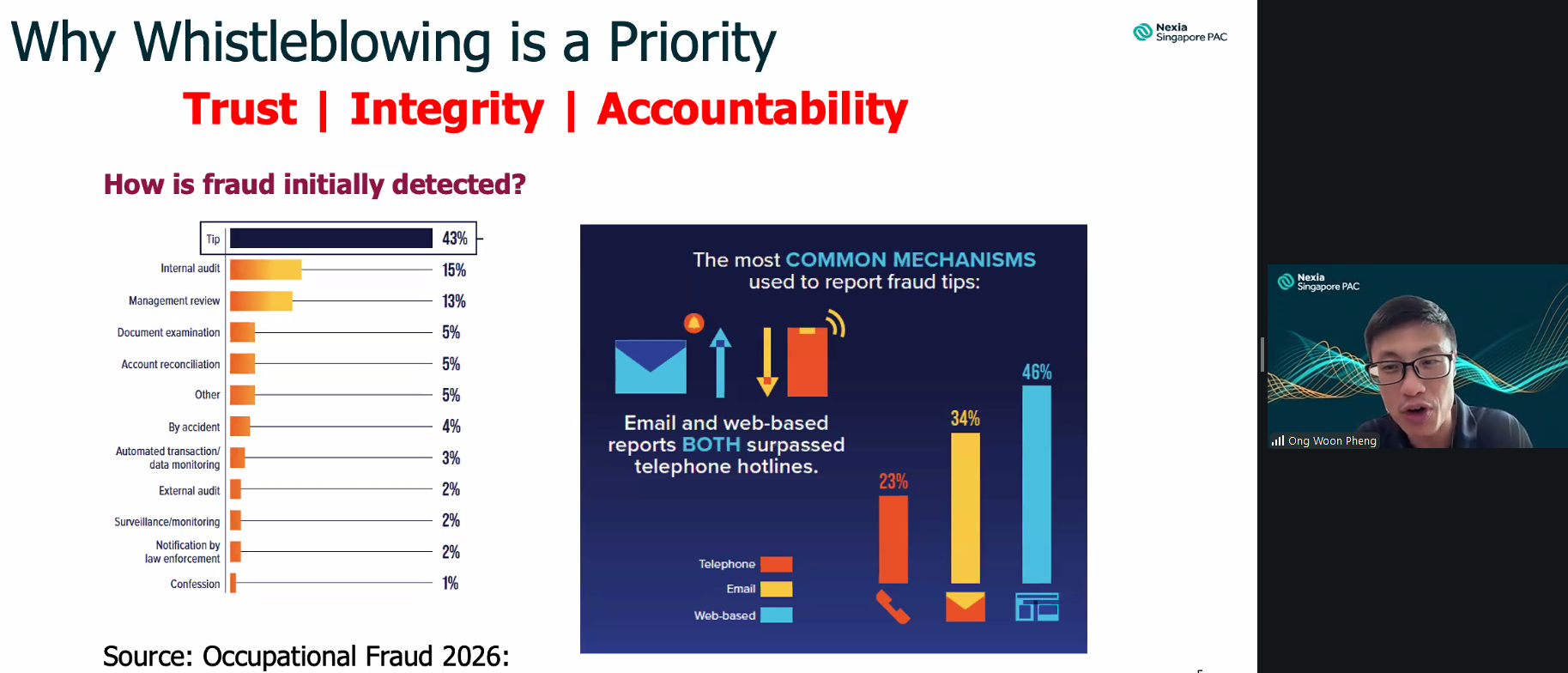
Opening the session, Ong Woon Pheng examined why whistleblowing has become a governance priority for organisations today. Drawing on findings from the Association of Certified Fraud Examiners’ Occupational Fraud 2026: A Report to the Nations, he noted that tips remain the most common method by which fraud is initially detected, accounting for 43% of cases. The finding underscores the importance of fostering a culture where individuals feel empowered to speak up and where concerns are addressed appropriately and independently.
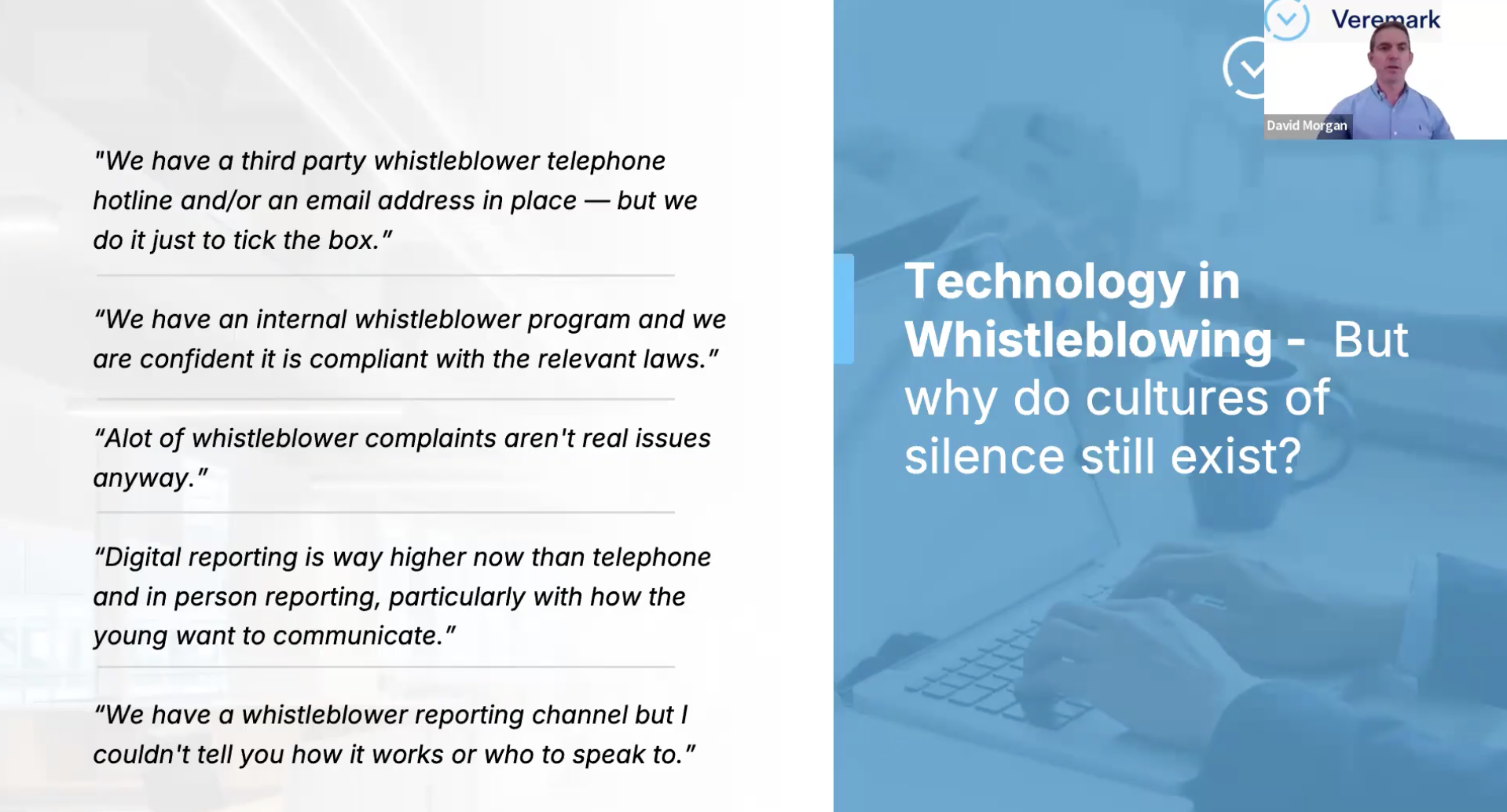
David Morgan followed with a discussion on the practical considerations involved in establishing effective whistleblowing programmes. He highlighted the importance of trusted reporting channels, consistent handling of disclosures, and safeguards that protect confidentiality throughout the reporting and investigation process, all of which contribute to confidence in the integrity of the system.
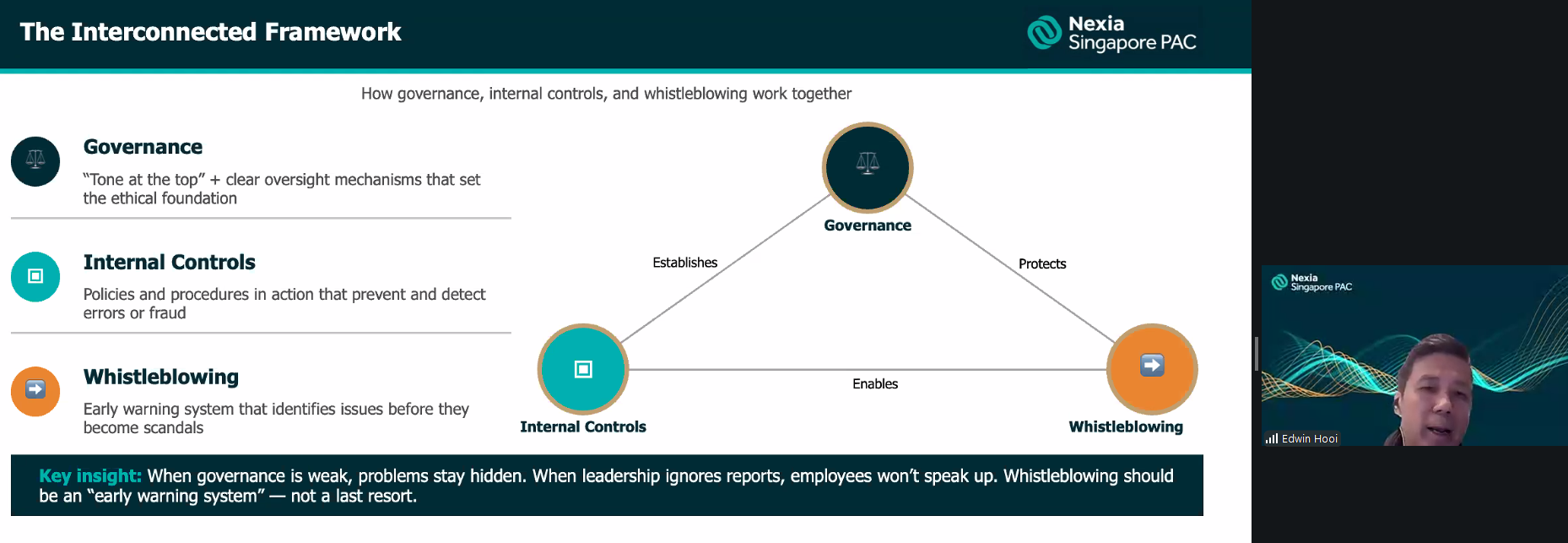
Edwin Hooi examined how governance, internal controls, and whistleblowing frameworks are closely interconnected. Drawing on the Boeing 737 MAX and SingPost cases, he highlighted how governance challenges can emerge when critical information does not reach the right decision-makers, or when oversight structures are unable to provide sufficient challenge and accountability. The discussion underscored the importance of clear escalation pathways, independent oversight, and robust assurance mechanisms in ensuring that risks and concerns are addressed before they develop into larger organisational issues. Ultimately, effective governance depends not only on having the right frameworks in place, but also on ensuring that those frameworks function as intended when tested.
Edwin emphasised that the effectiveness of internal audit rests not only on its independence, but also on adherence to the Global Internal Audit Standards, particularly Domain II: Ethics and Professionalism. By demonstrating integrity, maintaining objectivity, exercising due professional care, demonstrating competency, and maintaining confidentiality, internal auditors strengthen trust in the profession and provide stakeholders with confidence in the assurance they deliver.
The webinar reaffirmed that effective whistleblowing programmes are not standalone mechanisms, but part of a wider governance ecosystem. When supported by strong internal controls, ethical leadership, and an independent internal audit function, organisations are better positioned to detect issues early, respond effectively, and sustain a culture of integrity and accountability.