Internal Audit in Transition: Helping Boards Navigate Risk Effectively
As organisations navigate an increasingly complex and fast-changing risk landscape, the role of internal audit continues to evolve in supporting effective board oversight. These themes were explored at the Singapore Institute of Directors' (SID) Pit-Stop event, “Internal Audit in Transition: Helping Boards Navigate Risk Effectively”, held on 1 July 2026. The session brought together board directors, audit committee members and internal audit professionals to examine how internal audit can help organisations respond to emerging risks and build greater resilience.
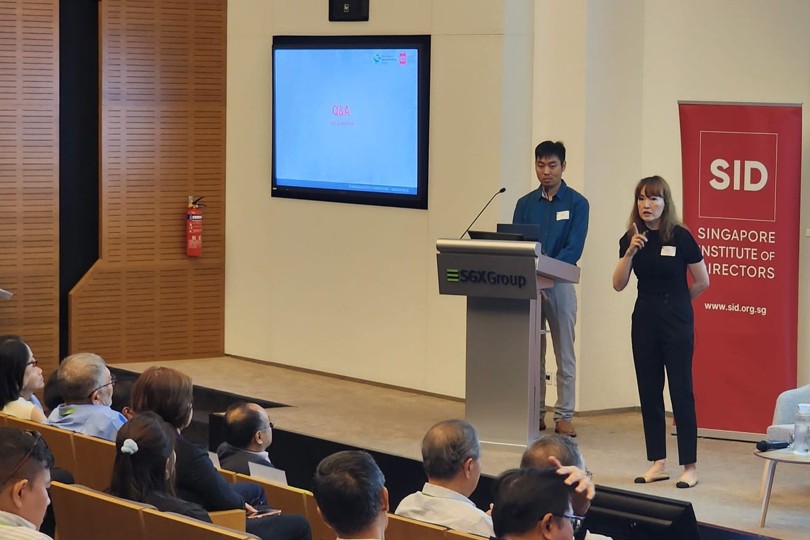
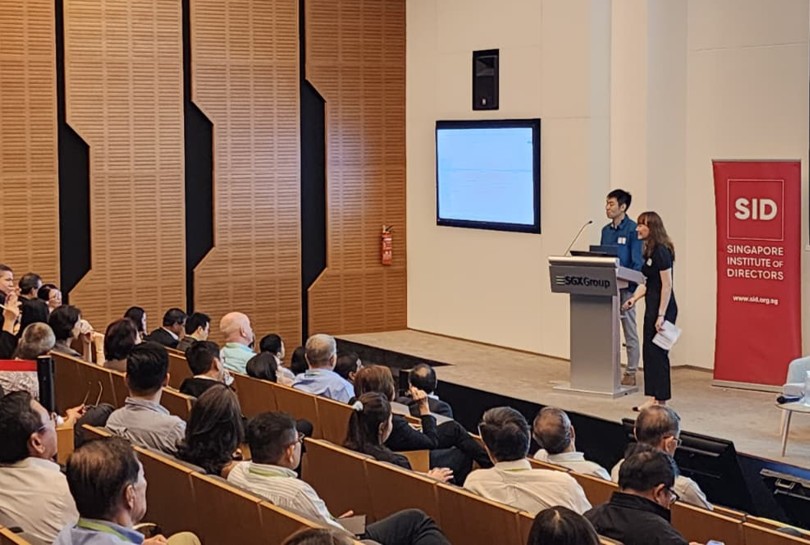
The session opened with a presentation by Sia Hwee Lay, Director of Internal Audit and Governor of IIA Singapore, and Dr Cheng Liu, Team Lead, Data Analytics, Internal Audit, both from GIC. Focusing on the growing relevance of artificial intelligence to the internal audit profession, they introduced the concept of agentic AI before demonstrating its practical applications through a live demonstration. The presentation also explored key considerations, implementation challenges and strategies for adopting AI responsibly within the internal audit function.
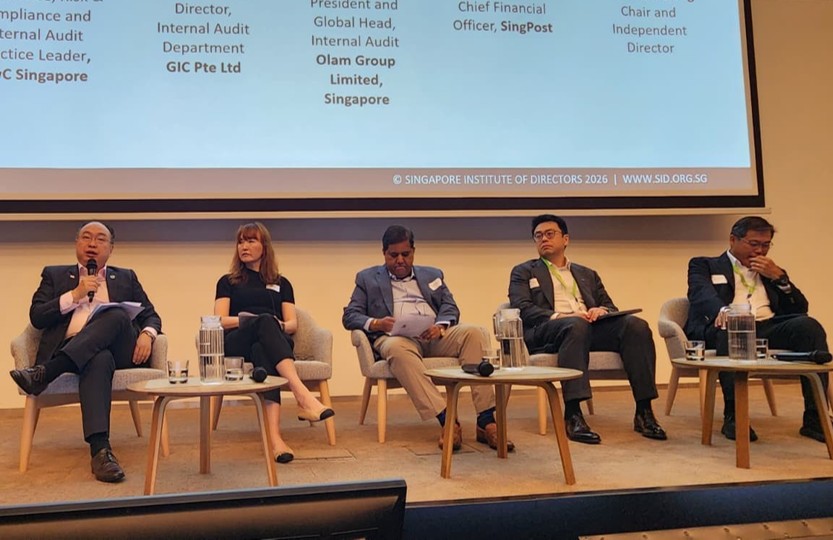
This was followed by a panel discussion moderated by David Toh (Governance, Risk & Compliance and Internal Audit Leader at PwC Singapore and President of IIA Singapore), featuring Hwee Lay, alongside Seah Chin Siong (Chair and Independent Director), Rajeev Kadam (President and Global Head, Internal Audit at Olam Group Limited, Singapore) and Isaac Mah (Chief Financial Officer, SingPost). Drawing on perspectives from the boardroom, management and internal audit, the panellists discussed how internal audit is evolving beyond its traditional assurance role to provide insight and foresight that support stronger governance, more informed decision-making and organisational resilience.
The discussion also highlighted the importance of equipping boards with visibility into emerging and interconnected risks, particularly in areas such as artificial intelligence, cybersecurity, geopolitical developments and supply chain resilience. Beyond controls and business continuity, the panellists emphasised that organisational resilience is also shaped by culture, preparedness, agility and the ability to respond effectively to disruption.
The session reinforced the growing value of internal audit as a trusted strategic partner to boards and management, providing independent assurance while delivering timely insights and foresight to help organisations navigate change with confidence.